
What if your dental clinic doesn't appear at the top of Google Maps not because of a lack of quality, but because Google isn't receiving the correct signals?
This question is key for any owner, dentist, orthodontist, or administrator who wants to attract more patients from local searches.
Because many clinics offer good treatments, have good equipment and deliver solid care, but still fall short of competitors who work better on their digital presence.
That's where the Google Maps ranking factors.
Google doesn't rank clinics by chance.
Evaluate signals such as proximity, relevance, reputation, data consistency, reviews, categories, photos, website, posts, and user interaction with your listing.
Each of these signals helps the algorithm decide which clinics to show first when someone searches for "dentist nearby", "orthodontist", "dental implants" or "dental emergency".
The problem is that many clinics have an incomplete listing, inconsistent NAP data, few reviews, poorly chosen categories, outdated photos, or a website that does not reinforce their local authority.
And when those signals are weak, Google has less reason to show that clinic in prominent positions.
In this article you will learn what the main Google Maps ranking factors are for dental clinics, how to optimize your Google Business Profile, how to manage reviews, how to strengthen your local SEO, and what mistakes you should avoid to improve your visibility and convert more searches into calls, routes, and actual bookings.
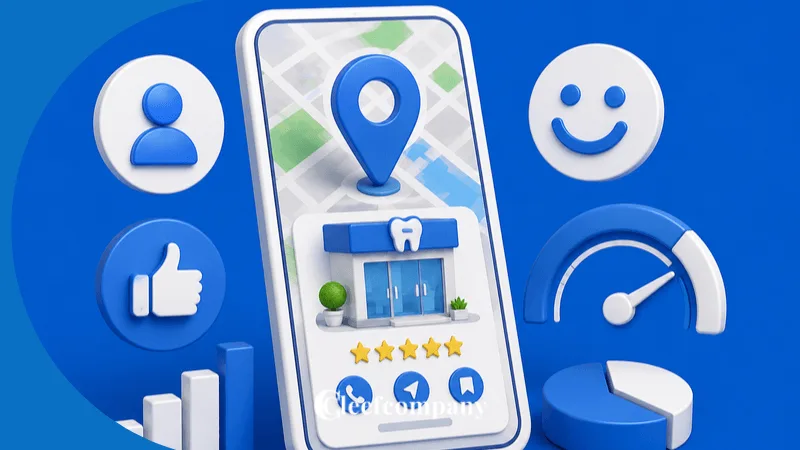
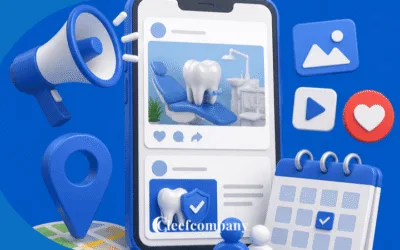
For a patient looking for a dentist, Google Maps acts as an immediate showcase of nearby options, sorted and filtered according to what the algorithm deems most relevant. In practice, if your clinic doesn't appear in the featured results, a large portion of the calls and bookings will go to other practices.
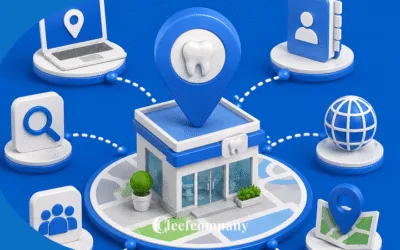
When a user types "dentist," "orthodontist," or "dental clinic" into Google, the search engine cross-references several signals. These include your Google Business Profile, your website content, the reputation of your reviews, and user interaction with your profile. The goal is to display clinics that combine three key elements: relevance, proximity, and prominence. This is where Google Maps ranking factors come into play.
For you, as the owner or manager, Google Maps isn't just about visibility; it's a reliable source of new patients. A good ranking means your clinic appears at the exact moment someone is experiencing pain, seeking a second opinion, or deciding to begin cosmetic treatment. At that precise moment, an optimized listing converts searches into calls, website visits, and directions.
Google Maps doesn't rank based on likeability, it ranks based on landmarks.
If your listing is incomplete, your information is inconsistent, or you receive few reviews, you're telling the algorithm that your clinic is less trustworthy and less relevant than others. Conversely, when you strategically manage your online presence, Google perceives a clinic as active, professional, and focused on the patient experience, which improves your ranking and your ability to compete.
The goal of this content is for you to understand, with the clarity of an owner and not just in technical jargon, what factors influence your ranking, how to optimize your presence, and how to convert that visibility into real patients. If you're interested in integrating Google Maps into a well-structured growth strategy, complementing this approach with a good [resource/platform/etc.] can be helpful. dental marketing system that connects searches, traffic, and treatment closures.
Main factors that influence the Google Maps ranking for dental clinics
If you want to improve your visibility using Google Maps ranking factors, you need to understand what Google looks for when it decides which clinic to show first and which to leave almost invisible. It's not a single factor; it's a combination of signals that reinforce each other.
1. Geographical proximity
Google prioritizes clinics near the user's location or the place they type in the search. As a clinic owner, this means you're not competing "against everyone," you're competing within a specific radius.
What you can control is ensuring your address is correctly configured, validated, and error-free in your Google Business Profile and across the internet. If Google detects any doubts about your location, it reduces your visibility compared to other, well-defined clinics.
2. Relevance of the profile
Relevance relates to how clearly Google understands that your listing belongs to a dental clinic, dentist, or orthodontist. The following factors carry significant weight:
- Main category, For example, a dental clinic or a dentist.
- Secondary categories related to specialties and services.
- Description with local SEO for dentists, including services and patient types.
- Services and treatments well detailed within the form.
The more specific and coherent information you include, the more relevance you gain in searches like "orthodontics", "implants" or "dental emergency".
3. Quality and quantity of reviews
Reviews are a direct indicator of trust and user experience. Google interprets:
- Number of reviews, Clinics without reviews are practically nonexistent in the eyes of the patient.
- Average rating, Low scores affect visibility and conversion.
- Text content, mentions of treatments, service and care.
- Frequency, Recent reviews indicate an active clinic.
Working on your Google Maps reviews for dentists is not optional if you want more calls and route requests to your clinic.
4. Appropriate Categories
Choosing the wrong main category is one of the biggest mistakes that hinders Google Maps ranking for dentists. You should:
- Use only one main category that describes your main activity.
- Add secondary categories only when you actually offer those services.
Generic or irrelevant categories reduce your relevance and confuse the algorithm.
5. NAP consistency and basic data
Consistent local NAP SEO is the foundation of Google's trust. Your Name, Address, and Phone Number must appear the same across:
- Google Business Profile.
- Clinic website.
- External directories and profiles.
Unupdated phone numbers, variations in business names, or misspelled addresses raise red flags. Google rewards clear, consistent, and easily verifiable data, and this is reflected in your Google Maps ranking factors and the number of patients who ultimately find your clinic instead of going elsewhere. If you want to view your marketing as a whole system, reviewing the dental marketing checklist and align your listing with your website and other channels.
Is your dental clinic losing patients online?
Many dentists have good treatments, good equipment, and good care, but they're not where the patient is looking.
At Cleefcompany we can review your digital presence, your website, your ads and your local positioning to detect real opportunities for improvement.
Is your dental clinic losing patients online?
Many dentists have good treatments, good equipment, and good care, but they're not where the patient is looking.
At Cleefcompany we can review your digital presence, your website, your ads and your local positioning to detect real opportunities for improvement.
Optimizing your Google Business Profile to improve your ranking
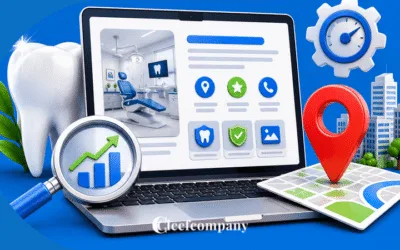
If you want to seriously compete with Google Maps ranking factors, your Google Business Profile can't be a "quickly filled-out" listing. It must function as the clearest, most complete, and most reliable online representation of your dental clinic.
1. Basic configuration, error-free and optimized for local SEO for dentists
Start with the basics, but do it right:
- Clinic name, Use your brand's real name, without adding forced keywords.
- Address, Write it exactly the same as on your website and other profiles, to maintain local NAP SEO consistency.
- Phone, prioritize a direct and operational number during business hours.
- Website URL, point to your homepage or a specific page for new patients.
Review this data periodically, at least once a month, as part of your routine to measure local dental SEO.
2. Categories, description, and services that increase relevance
Google Maps ranking for dentists depends largely on how Google ranks your listing.
- Main category, Select dental clinic or dentist, depending on your business positioning.
- Secondary categories, It integrates orthodontics, dental implants or other specialties, only if you actually offer them.
- Description, Write a clear text that includes local SEO for dentists, patient types, key treatments, and clinic focus.
- Services, It details each important treatment, for example orthodontics, aesthetics, rehabilitation, emergencies.
A good practice is to review your service offering periodically and compare it with your profile to avoid inconsistencies.
3. Photos, schedules, and posts that build trust
Google Business Profile for dentists works best when the patient can "see" the clinic before making a decision.
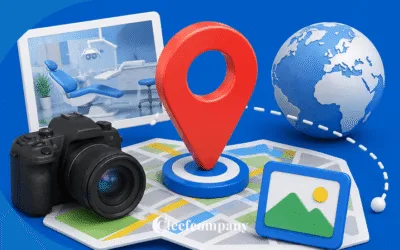
- Photos, Include clear images of the reception area, booths, facade, and equipment; avoid dark or outdated photos.
- Schedules, Always keep regular and special hours up to date; few mistakes cause as much frustration as calling a closed clinic.
- Publications, Use the posts to communicate promotions, new services, or patient-oriented trust messages.
4. Respond to reviews to reinforce local authority
Google Maps reviews for dentists aren't just a metric; they're a public conversation about your practice. To improve your Google Maps ranking factors and conversion rate:
- Respond to all reviews, both positive and negative.
- Use a professional and solution-oriented tone.
- Mention, where appropriate, key services and willingness to help the patient.
Including review management within your marketing and customer service system allows you to better connect your listing with the rest of your digital strategy. If you want to complement this optimization with a broader view of lead generation and conversion, it's worth reviewing the dental marketing diagnosis for clinics and organize all your patient touchpoints.
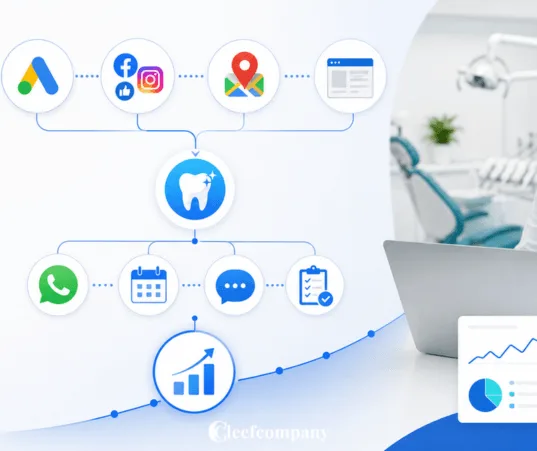
Turn your dental marketing into a system of consistent patients
A dental clinic doesn't just need to post on social media or launch individual ads.
You need a complete system that connects advertising, website, WhatsApp, tracking, scheduling, and results measurement.
We work with Google Ads, Facebook Ads, Local SEO and landing pages strategies focused on generating real inquiries for dental clinics.
Turn your dental marketing into a system of consistent patients
A dental clinic doesn't just need to post on social media or launch individual ads.
You need a complete system that connects advertising, website, WhatsApp, tracking, scheduling, and results measurement.
We work with Google Ads, Facebook Ads, Local SEO and landing pages strategies focused on generating real inquiries for dental clinics.
The importance of online reputation and how to manage it effectively
If you want to compete for top Google Maps rankings for dentists, a well-configured listing isn't enough. Your online reputation, especially reviews, defines how trustworthy Google and your future patients perceive you to be.
Why reputation matters so much on Google Maps
Google interprets your reviews as a direct signal of quality and real patient experience. It values three key aspects:
- Volume, How many patients have given their opinion about your clinic?.
- Average rating, how satisfied they say they are.
- Content, what they mention about treatments, treatment and results.
When your clinic consistently accumulates positive reviews, your Google Maps ranking for dentists improves, and your listing starts receiving more clicks, calls, and route requests. Conversely, a clinic with no reviews, or with unanswered negative comments, loses visibility and trust.
A practical strategy to encourage positive reviews
You don't need tricks, you need a clear and repeatable system. Integrate this flow into your daily operations:
- Define the ideal moment, For example, at the end of a treatment or check-up where the patient leaves satisfied.
- Train your team to request the review in person with a simple and direct phrase.
- Send a reminder by message or email with the direct link to your Google Business Profile for dentists.
- Track weekly, Check how many new reviews came in and adjust it as part of your routine for measuring local dental SEO.
The important thing is that the process is consistent and doesn't depend solely on your memory or the goodwill of the team.
How to handle negative reviews without damaging your ranking
Negative reviews aren't eliminated by ignoring them. They are managed methodically:
- Always respond, con calma y tono profesional.
- Agradece el feedback y reconoce el problema si corresponde.
- Ofrece una solución, invita a continuar la conversación por privado cuando sea necesario.
- Evita discutir en público, Google y los pacientes valoran más tu actitud que tener “la razón”.
Una reseña negativa bien gestionada puede generar más confianza que una lista de comentarios perfectos sin respuesta.
Si quieres integrar la reputación dentro de una estrategia más amplia de captación de pacientes y control de resultados, tiene sentido coordinar este trabajo con tus números financieros y de marketing. En contenidos como dental clinic finances puedes alinear reputación, visibilidad y rentabilidad para tomar decisiones con visión completa de tu clínica.
Complementary local SEO strategies to boost your ranking on Google Maps
Si ya trabajas los factores ranking Google Maps dentro de tu ficha, el siguiente paso es reforzar todas las señales externas. Aquí entra en juego el SEO local para dentistas, tu sitio web, tus enlaces y tu presencia en directorios especializados.
1. Palabras clave locales para dentistas y ortodoncistas
No basta con aparecer como “clínica dental”. Necesitas que Google relacione tu marca con búsquedas más específicas. Trabaja una lista de keywords locales dentistas que combinen:
- Tipo de profesional, por ejemplo dentista, ortodoncista, implantólogo.
- Tipo de servicio, como urgencias, estética, ortodoncia, implantes.
- Ubicación, sector o zona de referencia donde quieres captar pacientes.
Incluye estas palabras en títulos, descripciones, encabezados y textos de tu sitio. Esto refuerza la relevancia de tu ficha cuando Google cruza la información del sitio con tu Google Business Profile dentistas.
2. Contenido local en tu sitio web
Tu web debe complementar la ficha de Google Maps, no competir con ella. Crea contenido que responda a dudas típicas de pacientes de tu zona y que incluya SEO on-page local dentistas. Por ejemplo:
- Páginas específicas por servicio, cada una orientada a una intención de búsqueda concreta.
- Textos que expliquen cómo es el proceso en tu clínica, tiempos, tipos de tratamientos y opciones de pago.
- Secciones con preguntas frecuentes orientadas a pacientes que buscan una clínica cercana y confiable.
Un sitio claro, rápido y bien estructurado mejora la experiencia del usuario y respalda tu autoridad ante Google.
3. Enlaces locales y directorios de salud y odontología
Los enlaces externos y menciones en otros sitios refuerzan tu prominencia. Prioriza:
- Directorios de salud y odontología donde puedas registrar tu clínica con NAP SEO local coherente.
- Perfiles profesionales del equipo dental en plataformas reconocidas, siempre vinculados al sitio oficial.
- Medios y blogs especializados que acepten contenido informativo de valor relacionado con odontología.
Evita directorios genéricos de baja calidad. Enfócate en sitios donde tu presencia tenga sentido para un paciente que compara alternativas.
4. Cómo integrar todo en una estrategia medible
No se trata de hacer todo al azar. Define un plan mensual sencillo:
- Revisar keywords locales dentistas que estás trabajando.
- Actualizar o crear una página o sección nueva en tu sitio con SEO on-page local dentistas.
- Registrar o corregir tu clínica en uno o dos directorios relevantes, cuidando la consistencia NAP.
- Medir SEO local dental, revisando impresiones, clics, llamadas y solicitudes de ruta desde tu ficha.
Si quieres conectar este trabajo con los números de tu clínica y no solo con métricas de marketing, puedes apoyarte en contenidos como rentabilidad clínica dental, para alinear visibilidad, captación y resultados económicos de forma ordenada.
Does your clinic bill, but you don't know how much it actually earns?
Are you investing in dental marketing, but unsure if it's actually generating profits?
We can help you review whether your digital acquisition is aligned with your margins, your most profitable treatments, and your clinic's actual capacity to serve patients.

Does your clinic bill, but you don't know how much it actually earns?
Are you investing in dental marketing, but unsure if it's actually generating profits?
We can help you review whether your digital acquisition is aligned with your margins, your most profitable treatments, and your clinic's actual capacity to serve patients.
Common mistakes that hinder your ranking on Google Maps
Muchos dueños de clínica creen que con tener ficha ya están “en el juego”. En la práctica, varios errores silenciosos dañan tus factores ranking Google Maps y hacen que tu clínica pierda visibilidad frente a competidores más ordenados.
1. Información NAP inconsistente
Cuando tu Nombre, Dirección y Teléfono aparecen diferentes en cada sitio, Google duda. Ese ruido reduce tu confianza y tu posicionamiento Google Maps dentistas.
- Cambiar el nombre comercial en redes y no actualizarlo en Google Business Profile.
- Mostrar teléfonos distintos en web, ficha y directorios.
- Variar la forma de escribir la dirección, abreviaturas o números mal ingresados.
Solución, define un formato único de NAP SEO local, escríbelo en un documento maestro y úsalo siempre igual en todos los canales.
2. Perfiles duplicados o mal configurados
Tener dos fichas para la misma clínica, o una ficha antigua sin cerrar, divide reseñas, confunde al paciente y debilita tus factores ranking Google Maps.
- Ficha antigua sin horarios ni fotos que sigue apareciendo.
- Fichas creadas por terceros que no controlas.
Revisa el mapa con el nombre de tu clínica y solicita fusionar o cerrar todo lo que no corresponda a tu ficha oficial.
3. Ficha desactualizada o casi vacía
Una ficha sin fotos, sin servicios y con horarios mal puestos le indica a Google que la clínica está poco activa. Eso afecta la relevancia y la experiencia del usuario.
- No actualizar horarios especiales.
- No cargar servicios ni descripción con SEO local para dentistas.
- No publicar contenidos ni responder preguntas.
Integra la revisión de la ficha en tu rutina mensual, igual que revisas producencia o flujo de caja. Si ya trabajas la parte financiera de tu clínica con contenidos como flujo de caja clínica dental, incluye también un chequeo de marketing y visibilidad.
4. Gestión deficiente de reseñas
Ignorar reseñas, acumular pocas opiniones o responder solo a las negativas afecta reputación y conversión.
- Pedir reseñas de forma ocasional y sin sistema.
- Responder con mensajes genéricos que no aportan profesionalismo.
Define un protocolo claro para solicitar, responder y revisar reseñas Google Maps dentistas todas las semanas.
5. No medir ni auditar los factores ranking Google Maps
Muchos administradores solo actúan cuando baja la cantidad de pacientes, pero no miden SEO local dental ni detectan a tiempo los problemas.
- No registrar cuántas llamadas llegan desde la ficha.
- No revisar clics, solicitudes de ruta e interacciones clave.
Crea una lista de control mensual con puntos específicos, datos NAP, reseñas, categorías, fotos, publicaciones y métricas básicas. Igual que controlas costos o ingresos, necesitas una disciplina mínima de revisión para que tu posicionamiento Google Maps dentistas no dependa de la suerte.
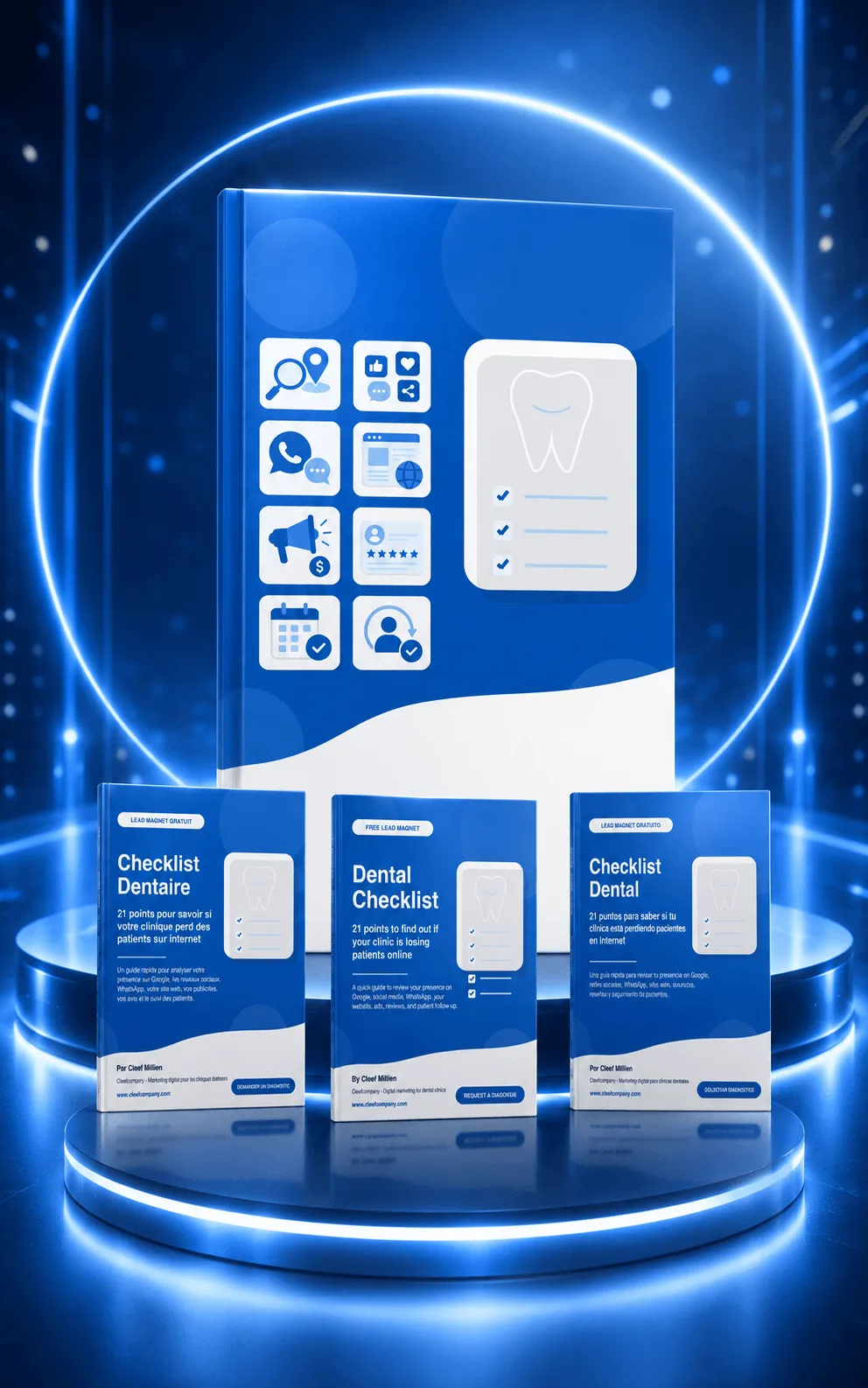
Download the checklist to find out if your dental clinic is losing patients online.
In just a few minutes, review the key points that every dental clinic should have under control to attract more patients from Google, social media, WhatsApp, and their website.
Many dental clinics do not have a problem with professional quality.
They have a problem with visibility, tracking, and conversion.
They may have good treatments, good doctors, and good care, but if they don't appear in Google, if their ads aren't properly configured, if their website doesn't convert, or if WhatsApp messages aren't answered quickly, patients end up choosing another clinic.
This checklist will help you review the most important aspects of your digital presence and identify clear opportunities for improvement.
Download it and use it as a quick guide to identify where your clinic may be losing patients each week.
We can also send you personalized recommendations if we detect clear opportunities for improvement.
Download the checklist to find out if your dental clinic is losing patients online.
In just a few minutes, review the key points that every dental clinic should have under control to attract more patients from Google, social media, WhatsApp, and their website.
Many dental clinics do not have a problem with professional quality.
They have a problem with visibility, tracking, and conversion.
They may have good treatments, good doctors, and good care, but if they don't appear in Google, if their ads aren't properly configured, if their website doesn't convert, or if WhatsApp messages aren't answered quickly, patients end up choosing another clinic.
This checklist will help you review the most important aspects of your digital presence and identify clear opportunities for improvement.
Download it and use it as a quick guide to identify where your clinic may be losing patients each week.
We can also send you personalized recommendations if we detect clear opportunities for improvement.
Conclusion
Si ves los factores ranking Google Maps como un sistema y no como una lista desordenada de tareas, tu clínica dental puede convertir el mapa en una fuente constante de nuevos pacientes. Google evalúa relevancia, proximidad, prominencia, reputación, consistencia de datos y comportamiento del usuario. Cada acción que tomas en tu ficha y en tu sitio web refuerza o debilita esas señales.
Una clínica que trabaja de forma ordenada su Google Business Profile dentistas, su SEO on-page local dentistas, sus reseñas y su NAP SEO local, construye una ventaja acumulativa. No se trata de un cambio puntual, se trata de un mantenimiento continuo y medible.
Tu hoja de ruta práctica puede ser simple, pero disciplinada.
- Definir un responsable interno para la ficha de Google Maps y la reputación online.
- Revisar una vez al mes categorías, horarios, fotos, servicios y publicaciones.
- Aplicar un protocolo fijo para solicitar y responder reseñas Google Maps dentistas.
- Actualizar el sitio web con páginas de servicios claras y optimizadas para keywords locales dentistas.
- Controlar la consistencia NAP en directorios y perfiles externos.
- Medir SEO local dental, llamadas, solicitudes de ruta y clics desde la ficha.
Si ya trabajas con indicadores financieros y rentabilidad, puedes integrar este seguimiento en tu tablero de gestión. Contenidos como estado de resultados clínica dental te ayudan a conectar marketing, costos e ingresos para tomar decisiones completas, no aisladas.
Los motores de búsqueda y los motores de respuesta seguirán afinando cómo interpretan las señales locales, pero la lógica de fondo se mantiene, clínicas claras, confiables, activas y bien valoradas tienden a ganar posiciones y pacientes. Tu tarea es construir ese perfil y sostenerlo en el tiempo.
La pregunta clave ya no es si Google Maps puede traerte pacientes, sino cuánto estás dispuesto a ordenar tu sistema para que eso ocurra de forma predecible.
¿Qué primer ajuste concreto vas a implementar esta semana en tu ficha o en tu sitio para fortalecer tus factores ranking Google Maps y acercarte a la clínica que quieres dirigir?



 Spanish
 English
0 Comments