
Have you ever wondered why some advertising campaigns seem to speak directly to your needs and desires, while others simply fail to capture your interest?
The key to effective and personalized advertising may lie in demographic segmentation.
Understanding how to use data on age, gender, and location not only helps in designing more relevant messages, but also optimizes the impact of your marketing strategies.
In this post, we'll reveal how demographic segmentation can transform your campaigns, helping you avoid common mistakes and harnessing its potential in the digital age.
Get ready to discover answers to frequently asked questions that will help you use this powerful tool more effectively.
What is demographic segmentation?
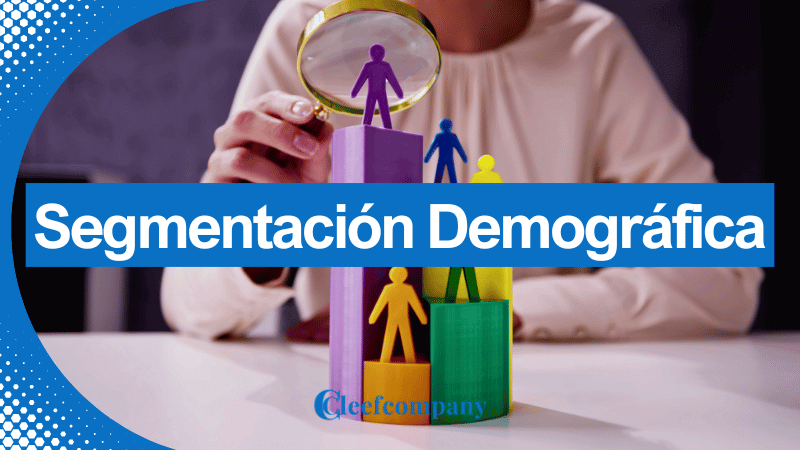
Demographic segmentation is the process of dividing the market into more specific groups based on demographic characteristics of consumers.
This includes aspects such as:
- Age:
– Identify the different age groups within your market.
– For example, product and service preferences can vary significantly among teenagers, young adults, and older people.
- Gender:
– Difference between the needs and preferences of men and women.
– Products and services can be designed or marketed differently to appeal to each gender.
- Income Level:
– It classifies consumers according to their spending capacity.
– Income levels affect purchasing decisions and the budgets available for different product categories.
- Educational Level:
– Consider the education level of your potential clients.
– Education can influence brand perception and willingness to pay for premium products.
Advantages and Disadvantages of Demographic Segmentation
Demographic segmentation offers significant benefits, but it also presents some challenges. Here I explain both aspects in detail:
Advantages of Demographic Segmentation
A. Precision in the Target Audience
Demographic segmentation allows you to identify and target specific groups of consumers based on characteristics such as age, gender, income, and education level.
- More Relevant Marketing
By understanding demographic data, you can create marketing campaigns that are more relevant and engaging for each segment.
- Improvement in Resource Efficiency
By focusing on specific audiences, you can optimize the use of your advertising resources and increase return on investment (ROI).
B. Message Personalization
Demographic information helps you tailor your message your campaigns so that it resonates better with different segments of your audience.
- Personalized Content Strategies
Design content and offers that fit the needs and preferences of each demographic group.
- Increase in the Conversion Rate
By providing personalized messages, your audiences are more likely to respond positively and take a desired action.
Disadvantages of Demographic Segmentation
A. Possible Lack of Depth in the Customer Profile
Although demographic data offers a general overview, it may not capture the individual complexities and motivations of consumers.
- Limitations in Understanding Behavior
Demographic segmentation does not always reveal why a customer acts in a certain way, which can limit the ability to personalize the experience.
- Risk of Stereotypes
It can lead to generalizations that do not always reflect the true needs and desires of individuals within a demographic group.
B. Need for Updated Data
Demographic data can quickly become outdated, especially in constantly changing markets.
- Continuous Data Collection
It is essential to keep data up-to-date to ensure the relevance and effectiveness of marketing strategies.
- Adapting to Market Changes
Adjust your marketing approaches regularly to adapt to changes in demographic and consumer trends.

Discover How Our Agency Can Boost Your Online Sales
Digital Advertising – Attract your target audience with effective advertising strategies.
Content Marketing – We create impactful content that captures attention and generates sales.
Conversion Optimization – Maximize your ROI with campaigns designed to convert.
Discover How Our Agency Can Boost Your Online Sales
Digital Advertising – Attract your target audience with effective advertising strategies.
Content Marketing – We create impactful content that captures attention and generates sales.
Conversion Optimization – Maximize your ROI with campaigns designed to convert.
Importance of demographic segmentation in modern marketing
Demographic segmentation plays a crucial role in modern marketing for several reasons:
- Improving Marketing Accuracy:
– It allows you to direct marketing efforts towards specific groups with similar characteristics.
– This increases the relevance of the messages and the effectiveness of the campaigns.
- Resource Optimization:
– It helps allocate resources more efficiently by focusing on segments that are more likely to respond positively.
– This can reduce waste in campaigns targeting less relevant audiences.
- Product Development Tailored to Market Needs:
– It facilitates the development of products and services that better align with the needs and desires of specific groups.
– By understanding demographic details, companies can tailor their offerings to meet the expectations of their target audience.
- Increased Customer Loyalty:
– With a better understanding of demographic segments, companies can create personalized campaigns that resonate more with their customers.
– This fosters greater customer loyalty and satisfaction.
By using demographic segmentation, businesses can design more effective and personalized marketing strategies that respond to the specific characteristics and needs of their target audiences. Are you ready to explore how to apply these concepts to your marketing strategy?
Tools and methods for demographic segmentation
To carry out effective demographic segmentation, it is crucial to use various tools and methods that allow you to understand and analyze your audience accurately.
Next, I'll explain some of the most important tools and methods:
Surveys and questionnaires
Surveys and questionnaires are essential tools for collecting direct demographic information from your consumers. Here's how to design and use them effectively:
1. How to design effective surveys
– Define Clear Objectives:
– Before designing the survey, establish what demographic information you need and how you will use it.
– This will help you formulate questions that are relevant and provide the necessary data for your segmentation.
– Create Specific Questions:
– Ask clear and specific questions about age, gender, income, education level, among others.
– Use a combination of multiple-choice questions, Likert scales, and open-ended responses to get a comprehensive view.
– Choose the Distribution Method:
– Decide whether you will distribute the survey online, by mail, or through face-to-face interviews.
– The choice of method can affect the response rate and the quality of the data collected.
Demographic data analysis
Analyzing demographic data allows you to identify key segments within your market. Here's how to use this data:
1. Use of demographic data to identify key segments
– Collect and Organize Data:
– Collect data from different sources, such as surveys, customer records, and sales analysis.
– Organize this data into demographic categories to facilitate analysis.
– Segment Audience:
– Use analytics tools to divide your audience into groups based on common demographic characteristics.
– Identify segments that have greater conversion potential or that represent your ideal customers.
– Develop Customer Profiles:
– Create detailed profiles of the key segments you have identified.
– These profiles will help you personalize your marketing strategies and adapt your offers to the needs of each group.
Online behavior tracking technology
Online behavior tracking technology allows you to collect additional data about how users interact with your digital content. Here's how to apply this technology to demographic segmentation:
1. Practical applications in demographic segmentation
– Implement Tracking Tools:
– Use tools like Google Analytics and tracking pixels to collect data about user behavior on your website.
– This data provides you with information about the pages visited, the time spent on the site, and interactions.
– Combining Demographic and Behavioral Data:
– Integrate demographic data obtained from surveys with online behavior to gain a more complete view of your users.
– Analyze how different demographic segments interact with your content and adjust your strategies accordingly.
– Optimize User Experiences:
– Use information about online behavior to personalize user experiences and increase the relevance of your campaigns.
– Adapts content and offers based on observed interests and behaviors.
By applying these demographic segmentation tools and methods, you can gain a deeper understanding of your audience and design more effective marketing strategies. Are you ready to put these techniques into practice and improve your market segmentation?
Examples of successful demographic segmentation
To understand how demographic segmentation can drive the success of marketing campaigns, it is helpful to study real-world cases of companies that have implemented it. effective strategies. Here are some examples of successful demographic segmentation and the lessons that can be learned from them:
Case studies of companies that have used demographic segmentation effectively
1. Nike: Personalization by Age and Gender
- Strategy:
– Nike has used demographic segmentation to personalize its advertising campaigns based on the age and gender of its customers.
– They created specific products and marketing campaigns targeted at different demographic groups, such as athletic shoes for teenagers and workout clothes for professional women.
- Results:
– Segmentation allowed Nike to increase the relevance of its products to different groups, improving conversion rates and engagement.
– Nike achieved a deeper connection with its customers, which resulted in significant sales growth.
2. Coca-Cola: Segmentation by Income and Location
- Strategy:
– Coca-Cola has segmented its advertising campaigns according to the income and location of its consumers.
– The brand launched different products and promotions in specific markets, such as premium editions in high-income areas and special offers in regions with lower purchasing power.
- Results:
– This strategy helped Coca-Cola adapt its offers and prices to the needs and purchasing power of each segment.
– The company was able to maximize its reach and optimize its resources in different regions.
3. Amazon: Segmentation by Purchase Behavior
- Strategy:
– Amazon uses demographic data combined with purchasing behavior to personalize product recommendations.
– Analyzes users' past purchases, searches, and visits to offer highly relevant recommendations and promotions.
- Results:
– This technique has led to an increase in sales and customer satisfaction, as the recommendations are tailored to the individual interests and needs of the users.
Lessons learned and applicable strategies
1. Adapting to Customer Needs
- Lesson:
– Adapting your products and services to the specific demographic characteristics of your customers can significantly improve the relevance of your offer.
– Companies must thoroughly understand their market segments to create strategies that align with their needs and preferences.
– Applicable Strategy:
– Conduct market research to identify the demographic characteristics of your customers.
– Design campaigns and products that fit these characteristics to increase the effectiveness of your marketing efforts.
2. Use of Data for Personalization
- Lesson:
– The use of demographic and behavioral data allows for more precise and effective personalization.
– Companies must integrate multiple data sources to gain a complete view of their customers and adapt their strategies accordingly.
– Applicable Strategy:
– Implement analytics and tracking tools to collect data about your customers.
– Use this data to segment your audience and personalize your marketing campaigns, maximizing impact and relevance.
3. Resource Optimization Based on Demographics
- Lesson:
– Demographic segmentation allows companies to optimize the use of their resources by focusing their efforts on the most promising segments.
– This can lead to greater efficiency in budget allocation and better campaign management.
– Applicable Strategy:
– Analyze the performance of your campaigns in different demographic segments.
– Adjust your budget and resources to focus on the segments that offer the highest return on investment.
By applying these lessons and strategies based on successful examples of demographic segmentation, you can improve the effectiveness of your marketing campaigns and achieve a significant impact on your target market. Ready to apply these principles and take your marketing strategies to the next level?
Are you using Facebook Ads or Google Ads?
Try 30 Days of Free Digital Advertising!
Stop losing money and discover your true potential digital advertising.
- Discover the power of targeted advertising.
- Reach your ideal audience.
- Maximize the efficiency of your advertising investment.
Free Digital Advertising for 30 Days

Are you using Facebook Ads or Google Ads?
Try 30 Days of Free Digital Advertising!
Stop losing money and discover your true potential digital advertising.
- Discover the power of targeted advertising.
- Reach your ideal audience.
- Maximize the efficiency of your advertising investment.
Free Digital Advertising for 30 Days
Current trends in demographic segmentation
To stay on top of current trends in demographic segmentation and improve the effectiveness of your marketing strategies, it's essential to understand how these trends are shaping the landscape. Below are the main trends and how you can apply them:
Real-time customization
Real-time personalization is transforming how companies communicate with their customers, enabling a more relevant and tailored experience for each individual.
1. Use of real-time data to tailor messages
– Instant Data Collection:
– Use real-time analytics tools to collect data on user behavior, such as page visits, clicks, and interactions.
– This information allows you to immediately adjust content and offers based on the user's current activity.
– Message Adaptation:
– Personalize messages and offers based on data collected in real time, such as showing products related to what the user is currently searching for.
– Implement dynamic changes in your campaigns to maintain relevance and capture the user's attention right when they are most interested.
Value-based segmentation
Values-based segmentation focuses on aligning offers and messages with customers' shared principles and beliefs, creating a deeper connection.
1. The role of shared values in demographic segmentation
– Identification of Key Values:
– Research and understand the values and principles that are important to your audience segments, such as sustainability, ethics, or inclusion.
– Use surveys, social media, and market research to identify these values in your potential customers.
– Alignment of Strategies:
– Design your marketing campaigns and products to reflect these values, which can include everything from choosing sustainable suppliers to messages that highlight your efforts for social responsibility.
– Ensure that your brand is consistent in its communication and actions with the values it promotes, strengthening customer loyalty and trust.
Social media data integration
Social networks are a rich source of data that can improve demographic segmentation by offering a more detailed view of user behavior and preferences.
1. How to leverage the power of social media for segmentation
– Social Media Data Analysis:
– Use social media analytics tools to gain insights into the demographics, interests, and behaviors of your followers and audience.
– Examine metrics such as engagement, most discussed topics, and demographic profiles to better understand your audience.
– Creation of Custom Audiences:
– Segment your advertising campaigns using demographic and behavioral data obtained from social platforms.
– Design ads and content targeted to specific audiences based on their interactions and preferences on social media, maximizing the impact of your marketing efforts.
Implementing these current trends in demographic segmentation will allow you to improve the effectiveness of your marketing campaigns, connect more deeply with your audience, and optimize your strategies to achieve your business goals.
Are you ready to integrate these trends into your marketing approach and take your segmentation to the next level?
Benefits and challenges of demographic segmentation
To understand the benefits and challenges of demographic segmentation, it's crucial to analyze how this strategy can impact a company's operations, as well as the potential obstacles that may arise. Here's a detailed explanation:
Advantages for companies
Demographic segmentation offers numerous advantages that can transform the way companies carry out their marketing strategies.
1. Improve marketing accuracy and campaign effectiveness
– Accuracy in Audience Reach:
– It allows companies to target their messages and offers to specific groups based on demographic characteristics such as age, gender, income, and location.
– This increases the relevance of the campaigns, which can lead to a higher conversion rate and a better response from the target audience.
– Resource Optimization:
– It facilitates the allocation of resources more efficiently by focusing marketing efforts on segments that are more likely to respond positively.
– By avoiding wasting resources on less relevant audiences, companies can improve the return on investment (ROI) of their campaigns.
Potential challenges
Although demographic segmentation has many advantages, it also faces challenges that must be addressed carefully.
1. Privacy and ethical issues in the collection of demographic data
– Privacy Concerns:
– The collection and use of demographic data can raise concerns about consumer privacy, especially if the data is sensitive or collected without proper consent.
– Companies must ensure that they are complying with data protection laws and that they are transparent about how user data is used.
– Ethical Considerations:
– There are ethical issues related to the way demographic data is segmented and used, such as the possibility of discrimination or exclusion of certain groups.
– It is crucial to implement responsible and fair practices when segmenting audiences to avoid any kind of bias or unfair treatment.
Leveraging the benefits of demographic segmentation can significantly improve the effectiveness of your marketing campaigns, but it is essential to address the associated challenges to ensure ethical and respectful implementation.
Are you prepared to balance the benefits and challenges of demographic segmentation in your marketing strategy?
Strategies for implementing demographic segmentation

To effectively implement demographic segmentation in your marketing strategy, it's essential to follow a series of strategic steps that ensure clarity in your objectives, the selection of the right tools, and proper team training. Here's how you can do it:
Define clear objectives
For demographic segmentation to be effective, you must establish well-defined goals to guide your marketing efforts.
1. Establish specific goals for demographic segmentation
– Define Marketing Objectives:
– Identify what you want to achieve with segmentation, such as increasing sales in a specific segment, improving customer retention, or launching a new product.
– Set measurable and achievable goals that can be evaluated based on specific data, such as growth in market share or improvement in the conversion rate.
– Segment Audiences Based on Objectives:
– Use your objectives to clearly define which demographic segments you need to reach. For example, if your objective is to increase customer loyalty, you could focus on segments with high purchase frequency.
– Ensure your goals are aligned with the needs and preferences of the identified segments to maximize the effectiveness of your campaigns.
Selection of appropriate tools and technologies
Choosing the right tools is crucial for the successful implementation of demographic segmentation.
1. Evaluation of available tools and their suitability for business needs
– Research Segmentation Tools:
– Examine the different tools and platforms available for demographic segmentation, such as CRM software, data analysis platforms, and marketing automation tools.
– Consider factors such as integration with your existing systems, ease of use, and the analysis and segmentation capabilities they offer.
– Select the Appropriate Tools:
– Choose tools that fit your specific business needs and that can provide the data and analysis necessary for effective segmentation.
– Evaluate the cost and return on investment of each tool to ensure you get the best value for your money.
Team training
A well-trained team is essential to effectively apply demographic segmentation techniques.
1. Ensure that the team is trained to effectively use demographic segmentation techniques
– Training in Tools and Techniques:
– Provide training to your team on the use of segmentation tools and demographic data analysis techniques.
– Make sure they understand how to interpret the data and how to apply segmentation in their marketing campaigns.
– Continuous Updates:
– Keep your team up-to-date with the latest trends and best practices in demographic segmentation.
– Organizes regular training sessions and encourages knowledge sharing to continuously improve the team's skills.
Implementing demographic segmentation effectively requires careful planning, the appropriate selection of tools, and adequate team training.
By following these steps, you can maximize the impact of your marketing campaigns and achieve your goals more efficiently.
Are you ready to put these strategies into practice and improve your approach to demographic segmentation?
Frequently Asked Questions about Demographic Segmentation
1. What is the difference between demographic segmentation and psychographic segmentation?
Demographic segmentation and psychographic segmentation are two different approaches to dividing an audience, and each offers a distinct perspective.
– Demographic Segmentation:
- Definition: It divides the audience based on quantifiable and objective characteristics such as age, gender, education level, marital status, occupation, and income.
- Example: Direct a marketing campaign for baby products specifically to women aged 25 to 35 who are first-time mothers.
– Psychographic Segmentation:
- Definition: It is based on qualitative and subjective aspects, such as values, interests, lifestyle, and personality. It seeks to understand the "why" behind purchasing decisions.
- Example: To offer wellness products to people interested in a healthy lifestyle and who value work-life balance.
2. How does demographic segmentation affect marketing personalization?
Demographic segmentation allows companies to personalize their marketing strategies more effectively by tailoring the message and offers to the specific characteristics of audience segments. This impacts several aspects:
– Relevance of the Message: It allows you to create messages and offers that resonate with the particular characteristics and needs of each demographic group.
– Resource Efficiency: Optimize the use of your marketing budget by targeting campaigns to groups that are most likely to respond positively.
– Improved Customer Experience: It offers a more personalized and relevant marketing experience, which can increase customer satisfaction and loyalty.
3. What type of demographic data is most relevant to my business?
The relevance of demographic data can vary depending on the type of business and its objectives. However, some common and valuable demographic data include:
- Age: For products or services that are targeted at a specific age group.
- Gender: If the product or service has a predominant preference or use based on gender.
- Income: To understand purchasing power and adapt offers to the economic capabilities of the segment.
- Location: To adapt marketing strategies to the geographic region and local interests.
4. What are the common mistakes to avoid when using demographic segmentation?
When applying demographic segmentation, it is important to avoid these common mistakes:
– Overgeneralization: Assuming that all members of a demographic group have the same needs and preferences can lead to ineffective marketing strategies.
– Outdated Data: Using outdated data can result in inaccurate segmentation and campaigns that do not reflect current market trends.
– Lack of Personalization: Failing to adapt the marketing message to the subgroup within the demographic segmentation can limit the effectiveness of campaigns.
– Ignoring Psychographic Segmentation: Focusing solely on demographic data without considering psychographic aspects can lead to an incomplete understanding of the client.
5. What role does demographic segmentation play in the digital age and social networks?
In the era digital and social media, Demographic segmentation plays a crucial role in:
– Targeted Advertising: Social media platforms allow for very specific audience segmentation using demographic data, which increases the accuracy and effectiveness of advertisements.
– Content Optimization: Companies can create content tailored to the demographic profiles of their audience, improving engagement and relevance.
– Measurement and Adjustment: Digital tools allow real-time monitoring of the performance of demographically segmented campaigns, facilitating quick adjustments to improve results.
Demographic segmentation in the digital age helps businesses reach their target audience more effectively, maximizing return on marketing investment and improving user experience.
Conclusions
In summary, the demographic segmentation It is a powerful tool that can revolutionize your marketing strategy, allowing you to connect more effectively with your audience and maximize the impact of your campaigns.
By understanding the difference between demographic and psychographic segmentation, and by avoiding common mistakes, you can use demographic data to personalize your messages and improve results.
In the digital age and on social media, this strategy not only optimizes your advertising efforts, but also positions you better in a competitive market.
Now that you've discovered how to apply demographic segmentation to your business, what's the biggest challenge you've faced when using this strategy?
Share your experiences or questions in the comments below. We're here to help you improve your campaigns and share more knowledge about effective marketing!







 Spanish
 English
 French
0 Comments